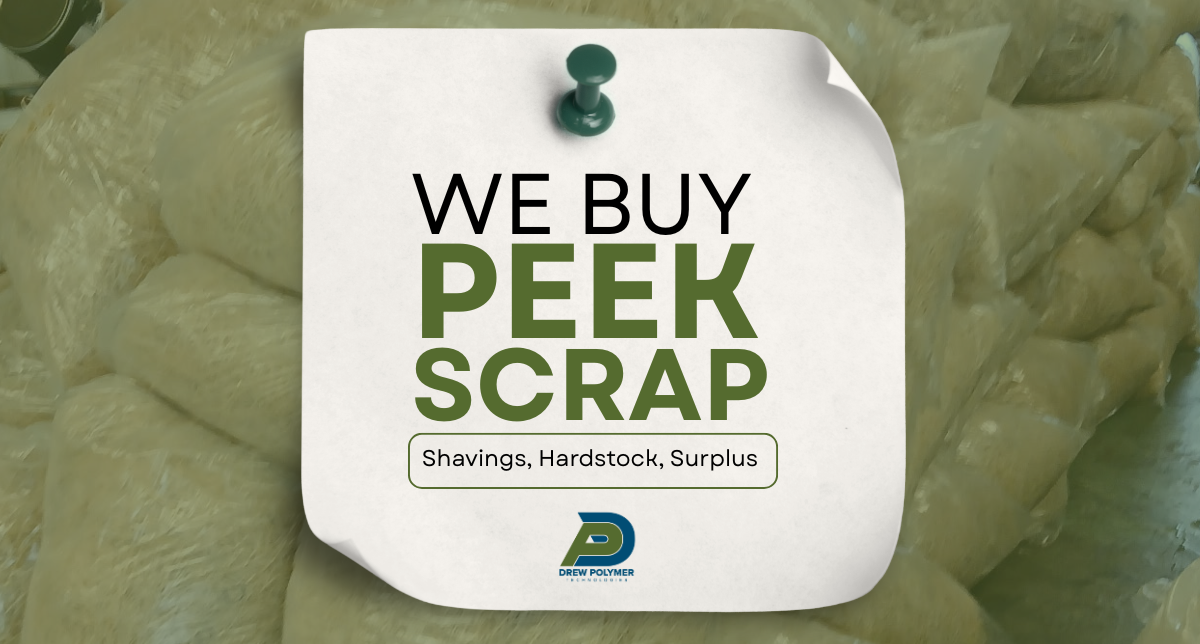
If your company generates PEEK scrap, shavings, rods, sheets, or production offcuts, you may be sitting on more value than you realize.
Polyether Ether Ketone (PEEK) is one of the most valuable engineering thermoplastics available. Because of its high performance and cost, recycled PEEK material has significant value, but only if it has been handled correctly.
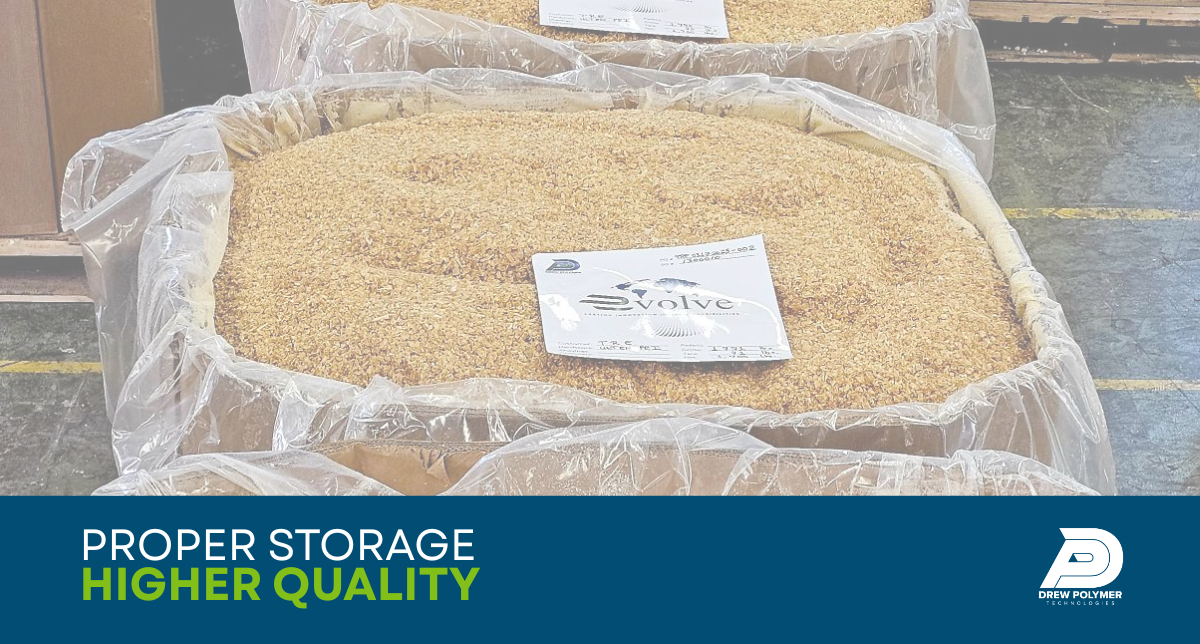
One of the biggest factors that determines the value of PEEK scrap isn’t just how much you have. It’s how well you’ve stored it.
At Drew Polymer, we purchase PEEK scrap from machine shops, manufacturers, OEMs, medical manufacturers, aerospace suppliers, oil and gas companies, and industrial facilities across the United States. One of the first things we evaluate is the condition of the material. Proper storage helps preserve its quality, simplifies the recycling process, and often results in a better return for the seller.
If you’re looking to maximize the value of your PEEK scrap, these best practices can make a significant difference.
Why Proper PEEK Storage Matters
PEEK is known for its outstanding chemical resistance, mechanical strength, and thermal stability. While the polymer itself is extremely durable, the value of scrap material can quickly decrease if it becomes contaminated with dirt, moisture, oils, metal chips, or other plastics. Once contamination occurs, sorting and processing become more difficult. In some cases, heavily contaminated material may require additional cleaning or may no longer be suitable for certain recycling applications.
Simple storage procedures can help preserve the integrity of your material while making it easier to recycle.
1. Keep Your PEEK Scrap Clean
Clean material is always more valuable than contaminated material.
During machining operations, it’s common for PEEK chips or offcuts to come into contact with cutting fluids, grease, dirt, cardboard dust, shop debris, or metal shavings. While a small amount of residue may seem insignificant, contamination adds time and cost to the recycling process.
Whenever possible:
- Store scrap immediately after machining.
- Use dedicated containers specifically for PEEK.
- Avoid placing scrap directly on shop floors.
- Keep containers covered when not in use.
- Prevent employees from mixing general shop waste with valuable plastic scrap.
The cleaner your material remains, the easier it is to process and the more desirable it becomes for recycling.
2. Keep It Dry
Moisture is another factor that can negatively impact stored material.
Although PEEK has very low moisture absorption compared to many engineering plastics, storing scrap in wet environments can still introduce unwanted contamination through water, condensation, dirt, or rust from surrounding materials.
For best results:
- Store containers indoors whenever possible.
- Keep bins away from standing water.
- Protect material from rain or excessive humidity.
- Use sealed containers or heavy-duty bags for long-term storage.
- Avoid leaving scrap outside for extended periods.
Dry, protected material is easier to evaluate and recycle than material exposed to the elements.
3. Separate Different Material Grades
Not all PEEK is the same.
Manufacturers use many different grades depending on the application. These may include:
- Virgin PEEK
- Glass-filled PEEK
- Carbon-filled PEEK
- Bearing grades
- Medical grades
- Oil & gas grades
- High-temperature formulations
Mixing different grades together reduces traceability and often makes the material less valuable.
Whenever possible, maintain separate containers for each grade generated during production. If you’re unsure of the exact grade, label it with as much information as possible, including:
- Original material supplier
- Part number
- Material description
- Manufacturing process
- Application
The more information available, the easier it becomes to identify and process the material correctly.
4. Prevent Cross-Contamination
One of the most common issues we see is valuable PEEK scrap mixed with other engineering plastics.
Machine shops often process multiple materials throughout the day, including:
- PTFE
- UHMW
- Acetal (Delrin®)
- Nylon
- PPS
- PEI
- Polycarbonate
Even if the materials appear similar, they should never be mixed together.
Cross-contamination increases sorting time and can reduce the value of the entire container.
A few simple practices help prevent this:
- Use dedicated bins for each material.
- Empty vacuum systems between material changes.
- Clean workstations when switching materials.
- Clearly identify containers before adding new scrap.
- Train employees on proper scrap segregation procedures.
A little attention during production can significantly improve recycling value later.
5. Label Containers Clearly
Proper labeling benefits everyone involved.
Without labels, identifying scrap becomes more difficult, especially when containers have been stored for months or moved between departments.
Each container should ideally include:
- Material type
- Material grade
- Fill percentage
- Date started
- Source department or machine
- Contact information (if shipping externally)
Clear labeling speeds up inventory management, prevents accidental mixing, and helps recycling partners evaluate material more efficiently.
It also reduces questions during the quoting process and allows for quicker turnaround when selling your scrap.
Common Types of PEEK Scrap We Purchase
At Drew Polymer, we purchase a wide variety of PEEK materials, including:
- Machining shavings
- Turnings
- Chips
- Rod remnants
- Plate remnants
- Sheet offcuts
- Overstock material
- Surplus inventory
- Production rejects
- Unused stock
- Manufacturing excess
Whether you generate a few boxes each quarter or multiple pallets each month, properly stored material is typically easier to evaluate and process.
Small Changes Can Lead to Better Returns
Many manufacturers focus on maximizing machining efficiency while overlooking scrap handling procedures.
However, a few inexpensive improvements can make a noticeable difference:
- Designate containers specifically for PEEK.
- Store scrap indoors.
- Separate different grades.
- Keep material free of contaminants.
- Label every container clearly.
These simple habits help preserve material quality while making recycling more efficient.Over time, they can also improve inventory organization, reduce waste, and increase the overall value recovered from production scrap.
Turn Your PEEK Scrap Into Value
PEEK is too valuable to throw away.If your facility regularly machines PEEK components, implementing proper storage practices today can help maximize the value of your scrap tomorrow. Clean, dry, well-organized material is easier to recycle, easier to evaluate, and often commands a stronger return than mixed or contaminated scrap.
At Drew Polymer, we work with manufacturers across the United States to purchase PEEK scrap, surplus material, production offcuts, rods, sheets, and machining shavings. Our goal is to make the recycling process straightforward while helping companies recover value from material that would otherwise sit unused.
If you’re unsure whether your PEEK material is recyclable, or you’d like a quote on your available inventory, contact Drew Polymer. We’d be happy to evaluate your material and help you get the most value from your PEEK scrap.